Method of implantation of an aortic conduit for aortic aneurysm
MISCELLANEOUS
Method of implantation of an aortic conduit for aortic aneurysm
Article Summary
- DOI: 10.24969/hvt.2026.643
- New technologies
- Published: 23/04/2026
- Received: 31/03/2026
- Accepted: 02/04/2026
- Views: 363
- Downloads: 277
- Keywords: Ascending aorta aneurysm, method of composite conduit implantation, invention
Address for Correspondence: Kuat B. Abzaliev, Al-Farabi Kazakh National University, Almaty, Kazakhstan
E-mail: kuat.abzaliev@gmail.com
Innovations and patents
Method of implantation of an aortic conduit for aortic aneurysm
Rustem M. Tuleutaev, Kuat B. Abzaliyev, Daurenbek O. Urazbekov
Al-Farabi National University, Almaty, Kazakhstan
Abstract
The invention relates to medicine, namely to cardiac surgery and can be used for effective prevention of bleeding, thrombosis, and fistula formation.
The objective of the invention is to develop a method for implanting a composite conduit in ascending aortic aneurysm using supraannular prosthetics on patches with Π-shaped sutures, for effective 100% prevention of bleeding, thrombosis, and fistula formation.
The technical result of the invention is to confer the following properties: effective 100% prevention of bleeding, thrombosis, and fistula formation. This technical result is achieved by threads pulled from the prosthesis cuff are applied to the outer surface of the aorta and are fixed on the patches, thereby effectively preventing bleeding due to complete wrapping and sealing of the cuff. Thrombosis does not occur due to complete isolation of the conduit cuff and absence of fixation sutures in the aorta lumen, preventing fistula formation.
Key words: Ascending aorta aneurysm, method of composite conduit implantation, invention
Graphical abstract
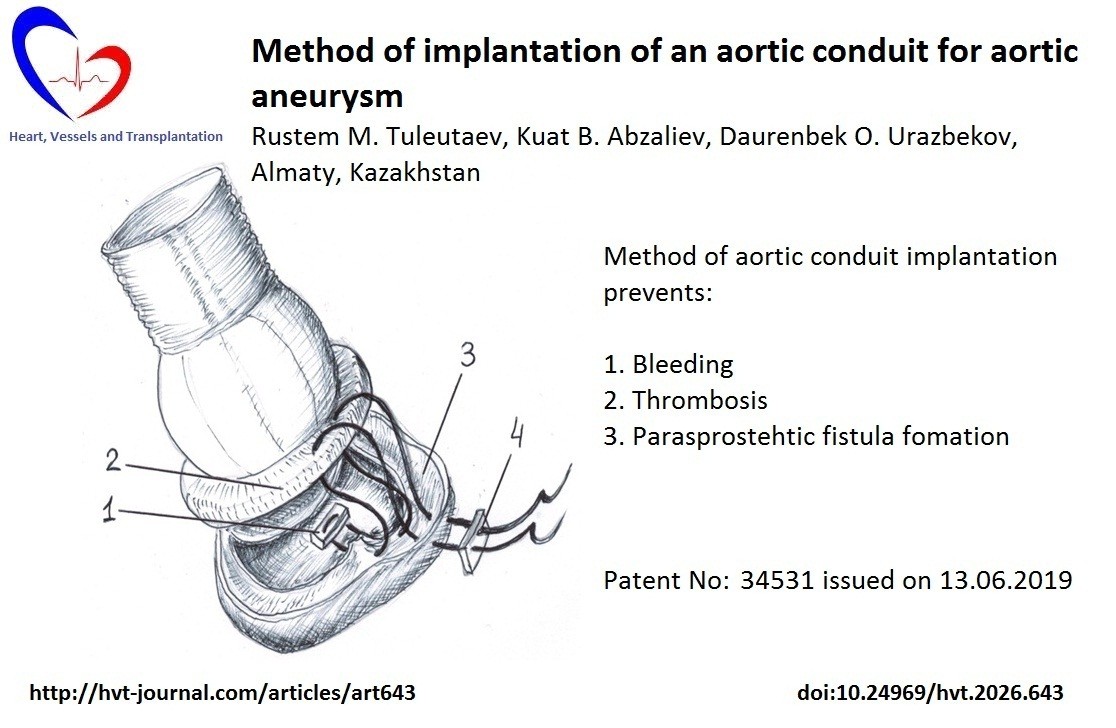
The invention relates to medicine, specifically to cardiac surgery, and can be used for effective prevention of bleeding, thrombosis, and fistula formation during implantation of an aortic conduit.
Various methods and modifications of composite conduit implantation are known, aimed at reducing and preventing bleeding, thrombosis, and fistula formation (1-4). Despite numerous modifications of this method of composite conduit implantation, bleeding remains one of the most serious complications of the operation.
The closest method is the one proposed by Umberto Bortolotti in 2010 (2). He suggested a method of implanting an aortic conduit for ascending aorta aneurysm by supraannular prosthesis on pads using 'U-shaped' sutures, by reinforcing the proximal anastomosis, fixing it to the prosthesis cuff. In this technique, at the beginning of the operation, the ascending aorta is transected 5-6 mm above the fibrous ring of the valve. After the conduit with the artificial prosthesis (composite graft) is implanted to the fibrous ring of the aorta, using 2-0 interrupted (U-shaped) sutures, the remaining transected aorta is sutured over the cuff of the graft using a continuous 3-0 Prolene suture. This was called a 'tandem suture line.' As a result, a kind of double row of sutures is formed on the prosthesis cuff.
Known implantation methods have shown effectiveness, but require additional manipulations, creation and suturing of artificial skirts, use of additional suture and synthetic material, and as a result, increased myocardial ischemia time, risk of myocardial infarction, which prolongs the operation time and does not effectively stop bleeding along the suture line. The disadvantages of these composite conduit implantation methods are that:
1. The method does not allow 100% effective control of bleeding from the aortic root due to high pressure in the aorta and lack of complete sealing.
2. The presence of a synthetic conduit cuff and sutures fixing it in the aortic lumen allows a thrombus to form on its surface.
3. Inter-suture leakage or suture cutting through may lead to the formation of a paraprosthetic fistula and external bleeding.
The objective of the invention is to develop a method for implanting a composite conduit in ascending aorta aneurysm by supraannular prosthesis on pads using 'Π-shaped' sutures, for effective 100% prevention of bleeding, thrombosis, and fistula formation.
The technical result of the invention is to provide it with the following properties: effective 100% prevention of bleeding, thrombosis, and fistula formation. The method was tested on 15 patients and showed 100% effectiveness, with no complications, whereas in the control group, bleeding occurred in 10%, fistula formation in 0.15%, and in the long-term follow-up, thrombus formation in 0.8%.
The specified technical result is achieved by the fact that the threads brought out from the conduit cuff, are passed onto the remaining part of the ascending aorta and fixed, covering the prosthesis cuff with the remaining aortic wall. Thus, effective prevention of bleeding is achieved due to complete sealing. Thrombosis does not occur because the conduit cuff is fully isolated and there are no fixing sutures in the aortic lumen, which also prevents fistula formation.
The method of implantation of the aortic conduit for ascending aorta aneurysm is shown in Figures 1,2.
Description of the methodology: after excision of the aortic valve and the aorta, the proximal part of the ascending aorta is left 5-10 mm above the fibrous ring. After placing 12-15 individual 'Π -shaped' sutures performed under the fibrous ring of the aortic valve supraannularly (1), the conduit`s cuff is sutured (2) with the subsequent bringing out of thread ends to the remaining part of the proximal aorta (3) and if necessary plug-type entry points are used (4) on the threads and fixation.
Using the proposed method of aortic conduit implantation in ascending aneurysm of the aorta will allow:
1. A 100% effective fight against bleeding from the aortic root creating complete hermetic sealing during prosthesis fixation.
2. Avoid thrombosis due to complete isolation of the valve cuff and absence of fixing stitches in the aorta lumen.
3. Avoid formation of a paraprosthetic fistula due to secure fixation and sealing.
Formula of the invention
Method of implantation of an aortic conduit for aneurysm of the ascending aorta through supraannular suture technique using supraannular prosthetics on patches with Π-shaped sutures, differs by that the threads brought out of the cuff of conduit are connected to the outer surface of aorta and fixed on patches in the way that after knotting suture threads, cuff of composite conduit is wrapped with the remaining part of ascending aorta and periprosthesis space is closed, proximal line of suture is strengthened allowing effectively prevent bleeding, thrombosis, and fistula formation.
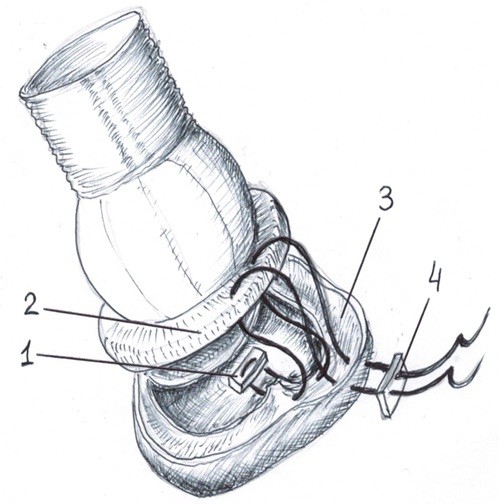
Figure 1. Path of the thread to obtain a 'sandwich' and thorough hemostasis
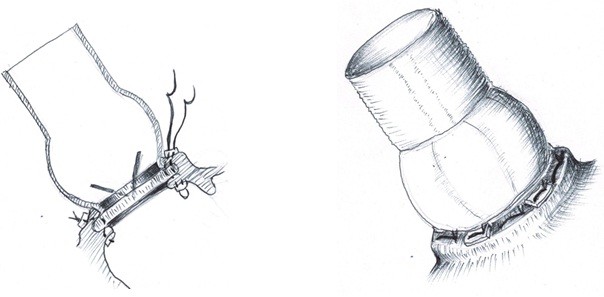
Figure 2. Diagram of aortic conduit implantation of the 'Sandwich' type (left) and the final view after
fixation
For this invention we received Patent No. 34531 issued on 13.06.2019 (Fig. 3)
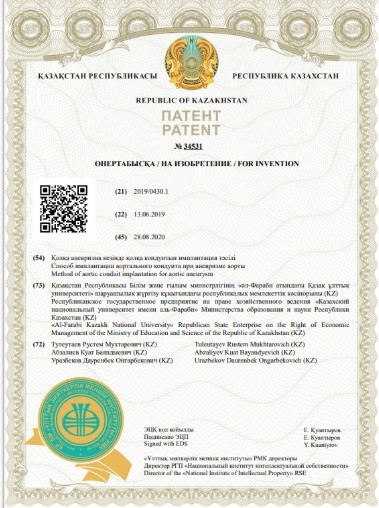
Figure 3. Patent No. 34531 obtained on 13.06.2019
Peer-review: Internal
Conflict of interest: None to declare
Authorship: R.M.T., K.B.A., and D.O.U. equally contributed to the preparation of manuscript and thus fulfilled authorship criteria
Acknowledgements and Funding: None to declare.
Statement on A.I.-assisted technologies use: Author stated they did not use artificial intelligence (A.I.) tools for writing manuscript
Data and material availability: Does not apply
References
| 1. Chen L.-W., Dai X.-F., Wu X.-J. A Modified composite valve dacron graft for prevention of postoperative bleeding from the proximal anastomosis after Bentall procedure. Ann Thorac Surg 2009; 88: 1705-7. https://doi.org/10.1016/j.athoracsur.2009.02.016 PMid:19853152 |
||||
| 2. Bortolotti U. Preventing bleeding from the proximal anastomosis after the Bentall procedure. Ann Thorac Surg 2010; 90: 698. https://doi.org/10.1016/j.athoracsur.2010.01.031 PMid:20667394 |
||||
| 3. Della Corte A, Baldascino F, La Marca F. Hemostatic modifications of the Bentall procedure: imbricated proximal suture and fibrin sealant reduce postoperative morbidity and mortality rates. Tex Heart Inst J 2012; 39:2:206-10. | ||||
| 4. Copeland 3rd JG, Rosado LJ, Snyder SL. New technique for improving hemostasis in aortic root | ||||
| replacement with composite graft. Ann Thorac Surg 1993; 55: 1027-9. https://doi.org/10.1016/0003-4975(93)90146-9 PMid:8466322 |
||||
Copyright

This work is licensed under a Creative Commons Attribution-NonCommercial 4.0 International License.
AUTHOR'S CORNER